About Alor

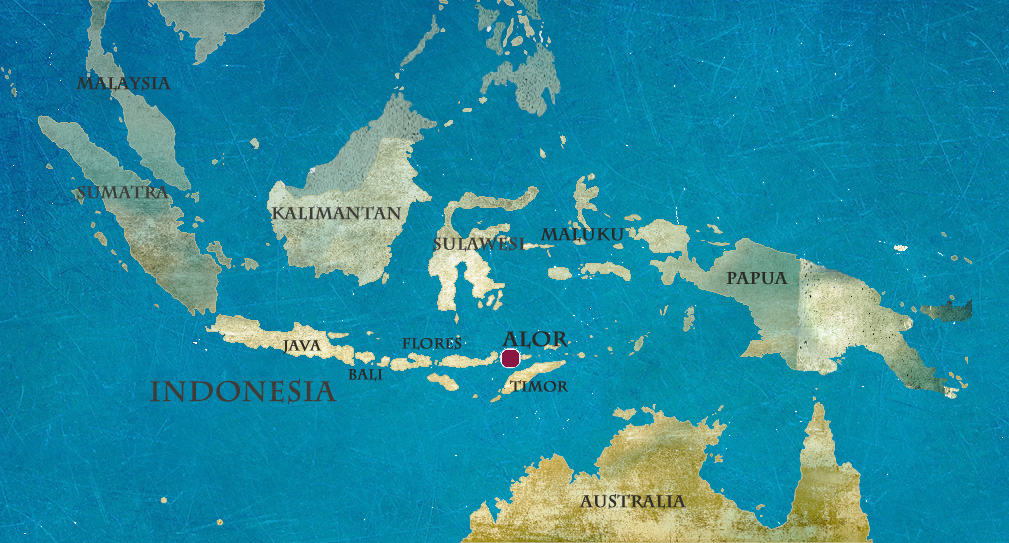
The island of Alor is located in the southeastern part of Indonesia in the province of East Nusa Tenggara near Timor.

About Alor, Indonesia
Indonesia is the world’s largest island country, consisting of more than 17,000 islands spread across a vast archipelago. Alor is one of these islands, located in the eastern part of the country and forming part of the Alor archipelago in East Nusa Tenggara.
Geographically, Alor lies east of Bali and Flores, and north of Timor. It sits within the Coral Triangle, one of the most biologically diverse marine regions on Earth. The island is bordered by the Savu Sea to the south and the Banda Sea to the north, placing it in a unique oceanographic zone influenced by deep currents and rich marine ecosystems.
Alor is part of the southeastern region of Indonesia and belongs to the province of East Nusa Tenggara, within the Lesser Sunda Islands chain.
Geography and Landscape of Alor
The island of Alor covers approximately 2,800 square kilometers (around 1,700 square miles), making it the largest island in the Alor archipelago.
The landscape is characterised by rugged volcanic terrain, steep hills, and mountainous interiors. Much of the island remains undeveloped, with small coastal settlements surrounded by natural vegetation and traditional agricultural land.
While the northern and central parts of Alor are dominated by rocky terrain and cliffs, the southern coastline features more accessible beaches and calmer waters. In particular, the southern coast of Alor and nearby Pantar Island are known for their white sand beaches, clear waters, and offshore coral reefs.
This contrast between mountainous interiors and coastal marine environments is one of the defining features of the island.
Population and Main Towns
Alor is home to more than 200,000 residents, with approximately 60,000 people living in the main town of Kalabahi.
Kalabahi serves as the administrative and economic centre of the island. It is where most government services, markets, and transport connections are based. Outside of Kalabahi, the population is spread across small villages and coastal communities that maintain traditional lifestyles.
Despite gradual development, Alor remains significantly less populated and less industrialised than many other Indonesian islands, contributing to its quiet and authentic atmosphere.
Culture and Languages in Alor
The culture of Alor is highly diverse and has been shaped by both Papuan and Austronesian influences over centuries. This cultural mix is reflected in the island’s traditions, architecture, and languages.
Alor is home to more than 15 distinct traditional languages, many of which are still actively spoken in rural communities today. This linguistic diversity makes Alor one of the most culturally rich regions in Indonesia relative to its size.
Religiously, the population is primarily Protestant and Muslim, with smaller Catholic communities and remnants of traditional animist beliefs in some remote villages.
Indigenous communities continue to preserve many aspects of their heritage, including ceremonial dances, weaving traditions, and oral storytelling practices passed down through generations.
Lifestyle and Local Economy
The people of Alor primarily rely on subsistence agriculture and small-scale fishing. Farming is an essential part of daily life, with crops such as black rice, candle nut, corn, cassava, coconut, and various vegetables and fruits grown across the island.
Fishing also plays a central role in the local economy and culture. One traditional method still widely used is the placement of bamboo fish traps called “bubu” on coral reefs. This technique has been passed down through generations and reflects a more sustainable approach to fishing, relying on natural materials and local ecological knowledge.
In addition to farming and fishing, small-scale trade and craftsmanship also support local communities, particularly in weaving and handicrafts.
Natural Environment and Tourism Context
Alor is part of the Coral Triangle, an area known for having the highest marine biodiversity on the planet. While this is often highlighted in relation to diving, it also reflects the broader ecological importance of the region.
The island’s remote location has helped preserve both its terrestrial and marine environments. As a result, tourism in Alor remains low-impact and relatively undeveloped compared to other Indonesian destinations.
This limited development has helped maintain the island’s natural landscapes, traditional villages, and cultural heritage in a more authentic form.
Travellers who visit Alor typically do so for nature-based experiences such as diving, trekking, cultural exploration, and wildlife observation.
Have any questions?

Alor Tanapi is a newly built dive resort located on the island of Alor, East Nusa Tenggara Indonesia, approximately 20 kilometres from the main town of Kalabahi.
Our intimate resort offers quality accommodation and diving facilities as well as a personalized service for couples and small groups.
Get in Touch
+62 (0) 812 4402 1697
info@alortanapi.com
Alor Tanapi Dive Resort, Sebanjar Desa, RT7 RW3, Alor Besar, Alor Barat Laut, Nusa Tenggara Timur 85851, Indonesia

Copyright 2022 Alor Tanapi Dive Resort.